
-

Try advanced features for free
Get Smarter responses, upload files, create images, and more by logging in.
Log In Sign up & Earn $5

Types of Artificial Intelligence, Models, and Algorithms

There are various types of artificial intelligence that are commonly used, but not many people understand the exact roles of these different types of AI. However, in the current digital landscape and direction that worklife is heading towards, people need to understand the various types of AI and how each works.
In this blog, the focus remains on the various types of artificial intelligence, including the different types of AI, standard AI models, the three primary types of artificial intelligence, and the fundamental types of artificial intelligence algorithms.
Understanding the Different Types of Artificial Intelligence
Understanding the various types of artificial intelligence enables people to observe how AI evolves incrementally. It progresses from basic forms to more advanced forms, and each type has its own unique style of operation.
You can find them listed in the following points:
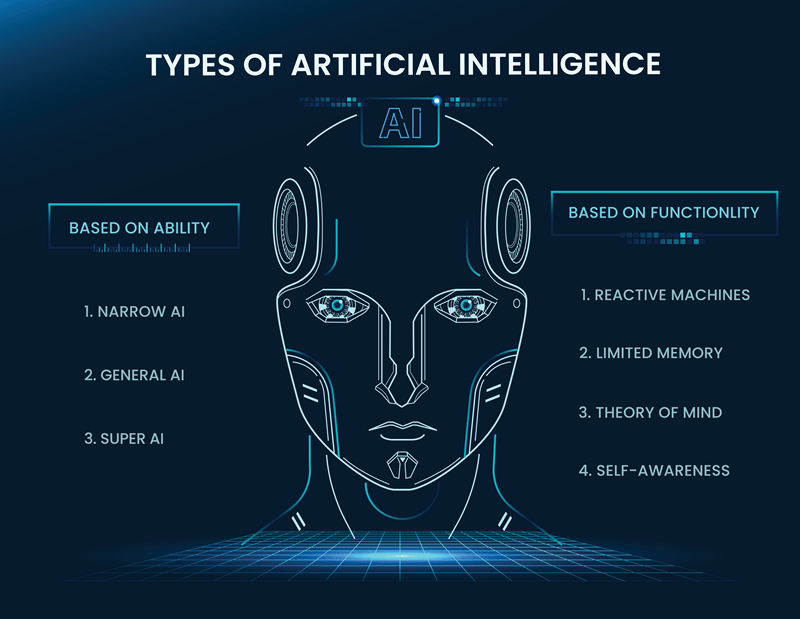
1. Reactive Machines
Reactive machines are the starting point on the standard list of AI types. They work only with what they see at the moment. They do not store memory and lack the ability to learn from past experiences. They simply react, which is why the name fits well. These machines are limited, but they help people understand the basic level when learning about the three types of artificial intelligence.
2. Limited Memory Systems
This type can learn from past information. It looks at older data and uses it to make slightly better choices. Many standard systems today fall under this group. When people discuss real-world use cases of different types of artificial intelligence, they often point to this category because it is straightforward to understand and helpful in many everyday tasks. It is also a significant part of the most used types of AI models.
3. Theory of Mind (Concept Stage)
Theory of Mind is still an idea. It describes AI that may one day be able to understand thoughts or feelings. This type is not active today, but it will be a significant part of future discussions. People often discuss it when explaining advanced aspects of artificial intelligence algorithms, as the idea itself raises numerous new questions.
4. Self-Aware AI (Concept Stage)
This form is also still a concept as well. It describes AI that may be able to understand itself in the future. It sits at the highest point when someone draws the full chart of types of AI. Although it does not exist, it helps people imagine the future and understand how different types of artificial intelligence could evolve.
Top Pick: Is an AI Companion Chatbot the Key to Beating Loneliness?
What are the Types of AI Models Used Today?
The types of AI models explain how AI learns. Some models learn with help, some without help, and some learn through trial and error. These models are the engine behind many tasks, and they demonstrate how AI evolves from simple actions to more stable learning patterns.
1. Supervised Learning Models
Supervised learning models learn from labeled information. The system sees an input and learns the correct output. It repeats this again and again until it understands the pattern. This model is often used when explaining the types of artificial intelligence algorithms because it illustrates the connection between input and output in the most straightforward manner possible.
2. Unsupervised Learning Models
Unsupervised models do not get labels. They examine the data and attempt to identify patterns independently. This makes them useful for tasks where the structure is hidden. They are a strong example of the different types of artificial intelligence, as they demonstrate how AI can learn without direct guidance.
3. Reinforcement Learning Models
Reinforcement learning models grow through feedback. They try something, see if the outcome is good or bad, and then adjust accordingly. Slowly and steadily, the system continues to improve. Many people use this to explain the middle part of the 3 types of artificial intelligence. These models are also used to teach the fundamental concepts behind various types of artificial intelligence algorithms.
Understanding the 3 Types of Artificial Intelligence Platforms
Most people search for the 3 types of artificial intelligence because they give a quick and simple overview. These three types show how AI moves from basic to advanced levels.
1. Artificial Narrow Intelligence (ANI)
ANI focuses on one specific task. It follows simple rules and performs one job well. This type forms the foundation of the AI world. It also helps explain the first step in the various kinds of artificial intelligence, making it a good starting point for beginners.
2. Artificial General Intelligence (AGI)
AGI is the idea of AI that can think and learn like a human. It can understand new tasks and adjust to new situations. It is the middle stage when explaining the 3 types of artificial intelligence, and it is often discussed when people talk about long-term AI research.
3. Artificial Super Intelligence (ASI)
ASI is the concept of AI that may one day surpass human intelligence. This form does not exist, but it is always included in the full list of the different types of artificial intelligence. It also completes the final stage by explaining the three types of artificial intelligence.
What are the Types of Artificial Intelligence Algorithms?
The types of artificial intelligence algorithms enable AI to learn and make decisions. These algorithms act like basic instructions that guide the system's choices. Understanding them gives people a simple view of how AI works behind the scenes.
Classification Algorithms
This algorithm helps the AI to organize the information into smaller groups. The classification algorithm is essential for various tasks and is used mainly by all AI platforms.
Clustering Algorithms
Clustering algorithms enable AI to identify natural groups in unlabeled data. They also help illustrate how certain types of AI models operate when they need to identify hidden patterns.
Optimization Algorithms
Optimization algorithms enable AI to select the most suitable answer from multiple options. They are used widely and are often included in basic explanations of the different types of artificial intelligence.
Read More: AI Audit Guide for Proper Usage of Artificial Intelligence
How to Find the Right AI Platform?
If you are looking for the best AI platform to complement you in your day-to-day tasks, Perplex AI is exactly what you need. It is a highly advanced platform that helps you in various ways, like doing in-depth research, image generation, writing, coding, and much more.
Conclusion
Learning the types of artificial intelligence becomes easier when each category is explained. This guide helps show how AI grows and learns. With a clear view of these types, you can now understand how exactly AI works today and how it can potentially grow in the future.


What can I help you with?
Unlock more with PerplexPlus
PerplexPlus gives you higher limits, smarter models, and more.